When your calendar is packed and the holidays are approaching, even a short pause can feel welcome. Could 15 minutes in a massage chair help you unwind between errands, work, and everything else on your list? And what should you realistically expect from that kind of break?
A massage chair session can offer a brief moment of comfort and a chance for your muscles to feel less tense. It isn’t a fix for chronic pain, an injury, or nerve symptoms. Keep reading to learn what a short session may, and may not, do, plus how to approach it thoughtfully.
What happens during a 15-minute massage-chair session?
A massage chair uses mechanical features such as rollers, kneading, tapping, or airbags to apply pressure and movement while you recline. The exact sensations vary by chair, program, and intensity. Some chairs also include heat; if so, treat it as a comfort feature, not a medical treatment.
For many people, the appeal is simple: you can sit back, let the chair move, and take a mental pause without needing to plan or perform. You may notice temporary ease in areas that feel generally tight, or simply enjoy resting for a few minutes. Your experience can vary, and stronger pressure isn’t automatically better.

What might 15 minutes do?
A short session may support temporary muscle relaxation and comfort. It can also give you a chance to slow down and shift your attention away from the day for a moment. Those modest benefits can be worthwhile on their own, especially during a busy November or December.
Research on massage chairs is still limited, and studies don’t all look at the same chair, settings, or session length. One pilot study tested 15-minute sessions twice a week over five weeks and looked at stress-related measures. That schedule is quite different from a single visit, so it can’t tell us exactly what you’ll feel after one 15-minute break. Quietly resting may contribute to the relaxing experience, too.
Another randomized study explored massage-chair use for office workers with ongoing neck and shoulder discomfort. Participants used a specific chair for 20 minutes, twice a week, for six weeks, alongside basic physical treatments. Those repeated sessions are not proof that a single short session treats pain or that results apply to every chair or person.
The practical takeaway? You may feel more settled or notice a short-lived change in general muscle tightness. It’s also completely possible to feel only that you enjoyed a comfortable pause. Either way, keep your expectations gentle and personal.
What a massage chair can’t do
A chair session isn’t a medical assessment, a diagnosis, or a replacement for care from a qualified healthcare provider. It can’t identify why you’re hurting, determine whether an injury needs treatment, or promise lasting relief.
Think of a massage-chair break as a wellness amenity for comfort and relaxation, not as a treatment for a health condition. If discomfort keeps returning, affects your daily activities, or is getting worse, it’s worth checking in with a healthcare professional rather than trying to massage through it.
How to make a session comfortable
If you’re generally comfortable and have no reason to avoid massage, a few simple choices can make your first experience more pleasant:
- Start with a gentle setting. You can always stop or adjust if the pressure feels too strong.
- Follow the chair’s instructions. The control panel and guidance provided on-site can help you choose an appropriate program.
- Stay aware of how you feel. Stop if you notice sharp pain, numbness, tingling, dizziness, or other new symptoms.
- Don’t aim for “deep.” A massage should feel comfortable. Pain isn’t a sign that it’s working better.
- Give yourself a moment afterward. Sit up slowly and notice how you feel before heading back into a busy day.
A massage chair may not suit everyone. Ask your healthcare provider before using one if you’re pregnant, have osteoporosis or a history of fracture, have had recent surgery or an injury, or have a condition that affects sensation, bleeding, or blood clots. If you’re unsure, check first rather than guessing.

When to contact a healthcare provider
Please seek professional advice instead of using a massage chair to manage pain that is persistent, severe, worsening, or related to an injury. It’s also important to get evaluated for pain that travels down an arm or leg, or symptoms such as numbness, tingling, or weakness.
A limb that becomes newly swollen, red, warm, and painful needs medical attention rather than massage. If symptoms are sudden or severe, seek urgent care. When in doubt, a clinician can help you decide what’s appropriate for your situation.
Where it can fit into a wellness-room visit
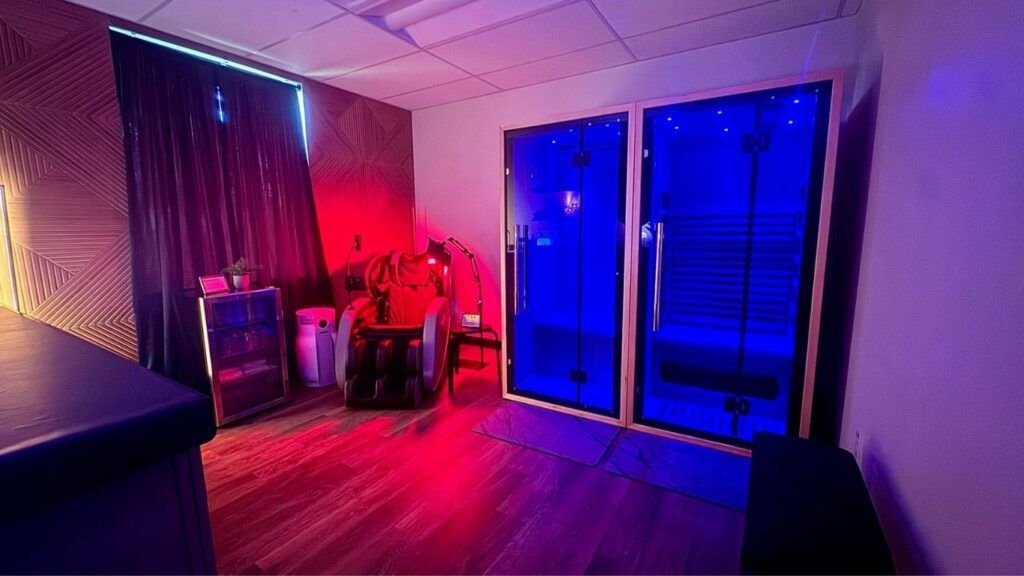
If your goal is simply to press pause, a massage chair can be one way to spend a few quiet minutes in a wellness setting. At Uplift Aesthetics, the chair is part of the Wellness Suite. If you’re looking for a wellness room in Oakdale, you can explore the suite details and decide whether the setting feels right for you.
The room also offers other amenities. Features such as heat, salt, and aromatherapy are intended to support relaxation and comfort; they do not treat or cure medical conditions. You can choose what feels comfortable for you without expecting a wellness amenity to do more than it’s designed to do.

A small pause, with realistic expectations
A 15-minute massage-chair session may offer temporary muscle relaxation and a welcome mental break. It may also feel different from person to person, and the research doesn’t establish that one short session will resolve pain or provide lasting results.
If a brief pause sounds appealing, you can give yourself permission to enjoy it for what it is: a few minutes to recline and reset. And if you’re using massage because something hurts, persists, or feels unusual, let a healthcare provider help you find the right next step.
Research references
- Clinical effects of using a massage chair on stress measures in adults: a pilot randomized controlled trial
- Effect of a massage chair on neck and shoulder pain in office workers: a randomized controlled clinical trial
- Case report: electrical automated massage chair use can induce osteoporotic vertebral compression fracture