You’ve completed a series of Kybella treatments, or you’re planning one, and you’re wondering: Will you need another round later? How many sessions are typical, and when is it time to stop?
It’s a fair question. Kybella treatment is planned in stages, but that doesn’t mean everyone needs the same number of visits or routine “maintenance” forever. Keep reading for a realistic look at what to expect, what can affect your results, and when another session might make sense.
A note about care: Kybella is a prescription treatment for adults with moderate to severe fullness associated with fat beneath the chin. A qualified healthcare provider should assess your anatomy, medical history, and goals before recommending treatment.
How many Kybella sessions are typical?
The FDA-approved dosing information allows up to six treatment sessions, spaced at least one month apart. Many patients see visible improvement after two to four sessions, while some may benefit from additional treatments within that limit. In the clinical studies cited in the prescribing information, 59% of participants received all six sessions. That figure describes the study participants, not a prediction of how many treatments you will need.
At Uplift Aesthetics, Kybella in Oakdale is offered through a consultation and an individualized plan. The number of sessions depends on the area being treated and how it responds over time. A session isn’t automatically booked just because a month has passed; your provider should reassess your progress and decide whether another treatment is appropriate.

Why might one person need fewer sessions than another?
There isn’t one standard number that fits every chin. Your starting point and your response both matter. For example:
- The amount and distribution of fullness: A smaller, more localized area may call for a different plan than a broader area.
- Your response to treatment: People can respond differently, and progress may become clearer gradually rather than right after an appointment.
- Your goals: The amount of change you want can influence whether another session is worth considering.
- Your anatomy and skin: A provider also assesses whether the fullness is actually due to submental fat and whether reducing it is likely to suit your features.
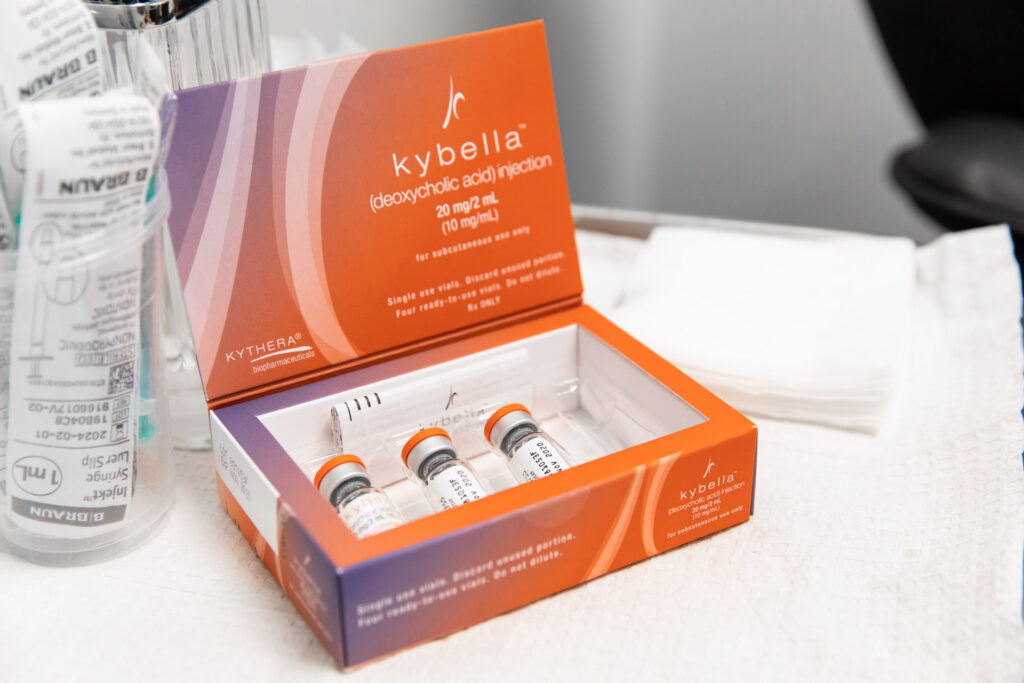
Kybella uses deoxycholic acid to destroy targeted fat cells beneath the chin. The body’s response and the visible change take time, so an early check-in may not show the full picture. Uplift’s Kybella service page notes that results develop over several weeks and that full results may take about three months. Your own timeline can vary.
Do destroyed fat cells come back?
Fat cells destroyed by Kybella do not return. But that does not mean your chin contour can never change again. Fat cells that remain in the treated area, and cells elsewhere, can enlarge with weight gain. Aging and other changes in your tissues can also affect how your profile looks.
In other words, the treatment can permanently destroy the cells it targets, but it cannot guarantee that your appearance will stay exactly the same for the rest of your life. Maintaining a reasonably stable weight may help you preserve your overall contour, though it cannot prevent every change.
The official KYBELLA® FAQs explain that once fat cells are destroyed, they can no longer store or accumulate fat. The FDA prescribing information describes how the treatment is administered and its approved use.
When does a second round make sense?
“Second round” can mean two different things: another session in your original course, or starting new treatments after you already finished a course. The distinction matters.
Another session in your original plan may be worth discussing if, after an appropriate interval, you still have fullness that your provider confirms is treatable submental fat and you are comfortable with the possible benefits and risks. Your provider may compare your progress with your starting point, review your goals, and check that the treatment area is healing as expected.
A new course after completing treatment is a different decision. There is no established routine schedule for ongoing Kybella maintenance in the FDA label. If fullness appears again, it’s sensible to start with an assessment rather than assume you need another round. A clinician can help determine whether the change reflects remaining or enlarged fat cells, another cause of fullness, or a concern Kybella may not address.

When is it time to stop?
Sometimes the best next step is no further treatment. Consider pausing and talking it through with your provider if:
- You’re happy with the improvement you’ve achieved.
- The area still seems swollen or is changing after a recent session.
- Your provider sees little remaining fullness that Kybella can appropriately treat.
- You’ve reached six sessions in the treatment series.
- The likely improvement no longer feels worth the downtime, cost, or possible risks to you.
The FDA-approved regimen allows up to six sessions, with at least one month between treatments. That limit is not a goal to reach. If you’re pleased with your result before then, more injections may not be necessary. And if you’ve reached the limit or have finished treatment, don’t assume that you should begin another series without a fresh clinical assessment.
Plan around healing, and know the risks
Kybella commonly causes swelling, bruising, pain, numbness, redness, and firmness in the treated area. Some reactions can last longer than a few days, so consider your calendar if you have client meetings, presentations, or events coming up. Your provider can explain what to expect and help you plan around recovery.
Kybella also has less common but important risks, including jaw nerve injury that can affect your smile, difficulty swallowing, infection, and skin or tissue injury. Contact your healthcare provider promptly if you develop facial muscle weakness, an uneven smile, difficulty swallowing, open sores, or drainage from the treatment area. If you have a history of swallowing difficulty or have had surgery or other cosmetic treatments in the area, share that during your consultation.

A realistic maintenance plan starts with a check-in
So, do you need a second round? Maybe, but not automatically. Many people see visible improvement within two to four sessions; some receive more, up to six, spaced at least a month apart. The right plan depends on your starting point, your response, your goals, and a careful assessment by a qualified provider.
If you’re researching Kybella St Paul options or looking for a Woodbury med spa, a consultation can help you understand what your current chin fullness may be and whether another treatment makes sense. At Uplift Aesthetics, the conversation can include your desired outcome, the time between sessions, your medical history, and realistic expectations, without assuming that more treatment is always better.
The goal is a plan that feels right for you, including knowing when you’ve had enough.