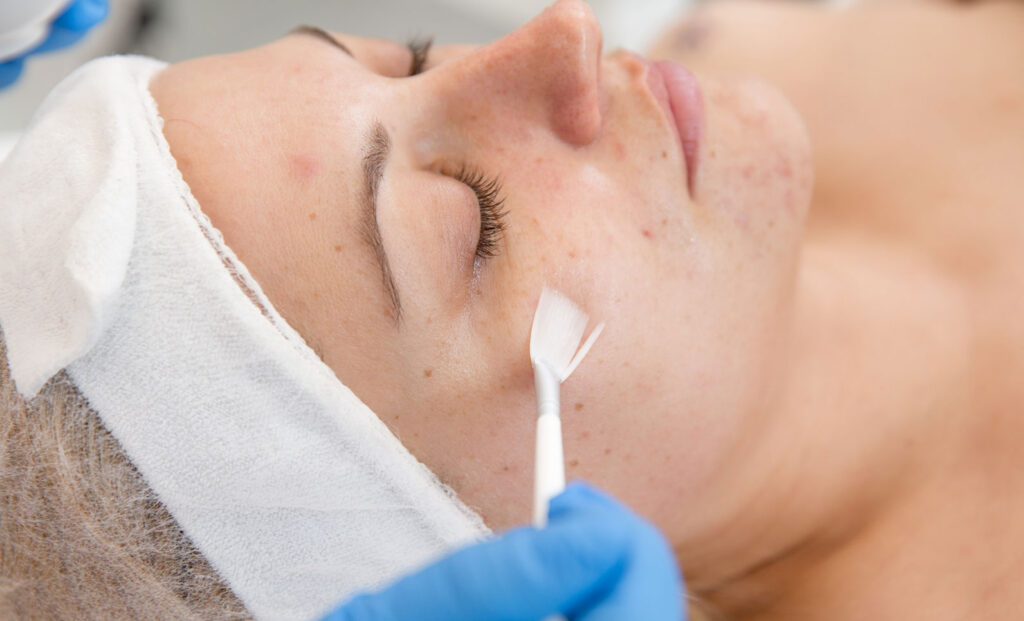
Wondering whether your next chemical peel should be a few weeks away, or several months? The right interval depends on the peel’s depth, how your skin heals, and what you’re hoping to address. So, could a thoughtful schedule help you work toward smoother-looking, more even skin without overwhelming your routine? Keep reading and find out more.
If you’re looking into a VI Peel in Woodbury or elsewhere in the Twin Cities east metro, one important thing to know is that there isn’t a universal calendar for every peel. A series may suit some superficial treatments, while a medium-depth peel calls for a much longer break. Your skin’s readiness matters more than a date on your planner.
How often can you get a chemical peel?
As a general guide, superficial peels may be repeated every few weeks, while medium-depth peels usually need a much longer interval, often months. Those are broad ranges, not a personal prescription. Your qualified provider should recommend timing based on the exact peel, your skin history, and how you respond.
The American Academy of Dermatology (AAD) notes that superficial peels may be repeated every 2 to 5 weeks, and that some people need a series to work toward their desired outcome. For medium peels, the interval is longer; Cleveland Clinic says repeat treatments may be spaced 6 to 12 months apart if needed. Your provider may recommend a different schedule, or no repeat peel, depending on your treatment plan.
| Peel depth | General timing guidance | What to keep in mind |
|---|---|---|
| Superficial | Often every 2–5 weeks | Only if your skin has recovered and your provider recommends another treatment |
| Medium-depth | Typically measured in months | Repeat timing varies; some guidance suggests 6–12 months |
| Deep | Not a routine series treatment | Requires specialized medical assessment and substantial recovery |
These time frames aren’t interchangeable. The name of a peel alone doesn’t tell you exactly how your skin will respond. Ask your provider which depth and formula are being considered and what interval they recommend for you.
Why peel depth changes the schedule
A chemical peel uses a solution to exfoliate the skin at a chosen depth. In simple terms, a superficial peel works closer to the surface, while a medium peel reaches further into the skin. Deeper treatment generally requires more recovery and a more cautious approach to repeating it.
For a light peel, the AAD describes healing that can take 1 to 7 days, with scaling sometimes lasting 3 to 7 days. A medium peel may involve 7 to 14 days of healing. Those are general expectations, not a promise of exactly how many days you’ll need; your experience can differ.
At Uplift Aesthetics, the VI Chemical Peel in Oakdale page describes several VI Peel options. It identifies VI Peel Original as superficial and VI Peel Precision Plus as a medium peel. That distinction matters when you’re discussing how often a treatment might fit into your plan. For a Woodbury-area appointment, a consultation can help clarify which option, and which spacing, makes sense for your concerns.

Why shouldn’t you stack peels too close together?
It can be tempting to book another treatment as soon as you see peeling stop, especially if you’re hoping to address a concern before holiday events. But visible flaking ending doesn’t automatically mean your skin is ready for another peel.
Treatments scheduled too close together can add irritation when your skin is still recovering. Your provider may advise you to wait if you have lingering redness, tenderness, sensitivity, or other signs your skin hasn’t settled. The goal is not to squeeze in as many peels as possible. It’s to choose a sensible pace and give your skin time to recover between appointments.
Check in with your provider if symptoms feel more intense than expected or continue longer than the aftercare guidance describes. Don’t try to speed healing by picking at flaking skin or adding exfoliating products without guidance. Following your aftercare instructions is a practical way to support a more comfortable recovery.
What can affect your personal peel interval?
Your provider may consider several factors before recommending another chemical peel:
- The peel formula and depth: Different treatments can have different recovery needs.
- Your skin’s response: Redness, tenderness, prolonged sensitivity, or irritation may mean you need more time.
- Your goals: A series may be appropriate for some concerns, while another plan may be better for others.
- Your skin history and routine: Sensitivity, current products, medications, and recent treatments can affect the plan.
- Your calendar: Work events, travel, and holiday plans can influence when you’re comfortable scheduling recovery time.
Be open about what you use on your skin and any recent sun exposure or treatments. That gives your provider useful context before choosing a peel or planning another one.

Planning a peel during fall and winter
November through winter can be a convenient time to consider a peel. Many people have fewer outdoor plans than in summer, and it may be easier to schedule downtime around a quieter week. But winter is not a “no-sun” season: daylight, outdoor errands, and snow glare still make sun protection important.
Plan around your real schedule, not just the season. If you have holiday photos, travel, a client presentation, or a celebration coming up, ask how much recovery time to leave. Uplift Aesthetics notes that a VI Peel may involve up to a week of peeling, so it can be helpful to avoid placing a new treatment right before a date when you want your skin to look settled.
After your skin has healed, use sunscreen as directed. The AAD recommends daily sunscreen after a peel; choose broad-spectrum SPF 30 or higher and follow your provider’s specific instructions. Your clinician may also advise you to avoid sun exposure during healing.
What should you do between peels?
Keep your routine straightforward while your skin recovers. Follow the aftercare instructions for your particular peel, and don’t restart retinoids, acids, scrubs, or other potentially irritating products until your provider says it’s appropriate.
For VI Peel appointments, Uplift Aesthetics advises avoiding retinol or other irritating products for at least 7 days before treatment, and avoiding sun exposure or sun damage for at least 1 week beforehand. The clinic also recommends using only instructed products for 1 week after the peel. Your instructions may vary, so follow the plan given to you rather than applying a general timeline to every treatment.
When should you wait or ask your provider?
Your next appointment may need to move if your skin still feels irritated or hasn’t healed as expected. Contact your provider for guidance if you notice persistent or worsening redness, significant discomfort, blistering, crusting, or other symptoms that concern you. It’s also worth checking in before a peel if you have an active skin flare, a recent sunburn, or a change in medication or skincare.
A consultation is a good time to discuss your goals, skin history, treatment options, expected recovery, and timing. You don’t have to arrive knowing which peel, or how many, you need. A qualified provider can help you understand the options and whether a peel is suitable for you.
The takeaway: let your skin set the pace
For many superficial peels, spacing may be measured in weeks. For medium-depth peels, it is typically measured in months. But the right interval depends on the exact treatment and your skin’s recovery, not simply the next open spot in your calendar.
If you’re considering a VI Peel in Woodbury, Oakdale, or the St. Paul area, a consultation-first conversation can help you plan around your skin goals and winter schedule. With an individualized plan, clear aftercare, and consistent sun protection, you can take a thoughtful next step toward skin that feels cared for.