Have old acne scars that still catch your eye in certain light? You may be wondering whether SkinPen microneedling could soften their appearance, and how many appointments it might take. Could a series be a reasonable next step for your skin goals? It may be, depending on the kind of scars you have and what you expect treatment to do.
Microneedling, also called collagen induction therapy, is a gradual approach, not a promise of scar-free skin. Keep reading to learn what a series may help with, what it can’t reliably change, and why a thoughtful consultation matters.
What SkinPen microneedling does
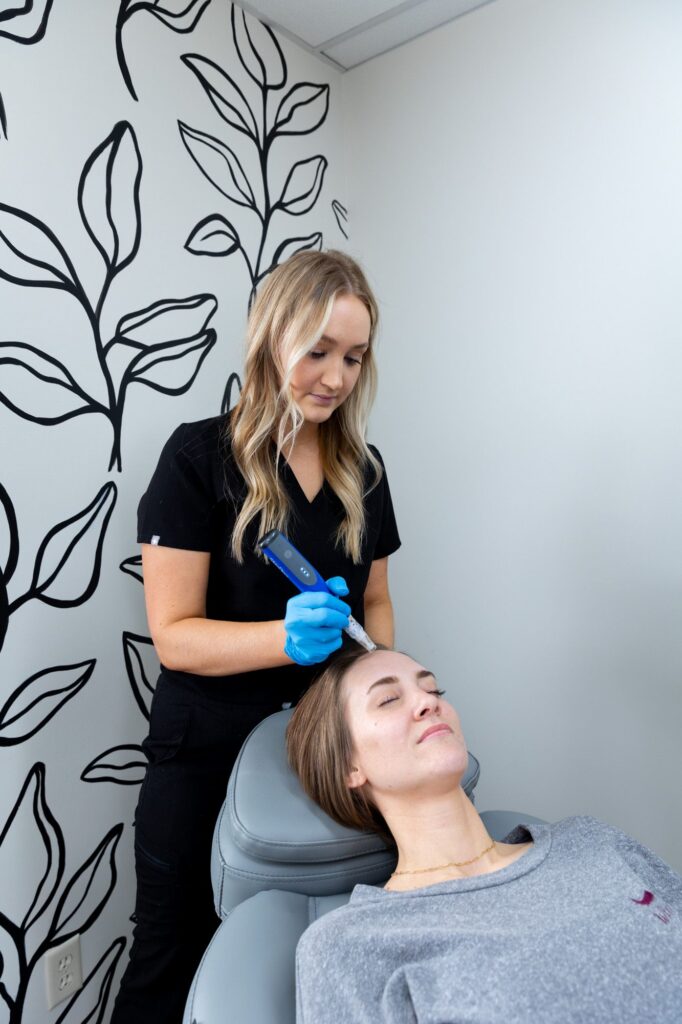
SkinPen uses fine needles to create controlled micro-injuries in the skin. As your skin heals, it may produce collagen and remodel tissue. Over time, that process can improve the look of some atrophic acne scars. The indented or depressed marks left after acne.
The goal is usually to make certain scars look softer or less noticeable, not to erase every mark. Changes develop gradually, and your response can depend on scar type and depth, skin characteristics, healing, and treatment plan.

Which acne scars may respond, and which may need another plan?
“Acne scars” can describe several different things. A clinician will look at the shape and depth of your scars, not just their presence.
- Shallow, rolling or boxcar scars: Some depressed scars may become less noticeable as the skin remodels. The amount of change varies.
- Deep or narrow ice-pick scars: These extend farther into the skin and may not respond as well to microneedling alone.
- Raised scars: These are a different type of scar and need their own assessment.
- Red or brown marks: Color left after acne is not the same as a depressed scar. SkinPen’s collagen-remodeling process may not address discoloration in the same way it addresses uneven texture.
- Active breakouts: If you’re still experiencing acne, a provider should assess that first. Microneedling over active or irritated skin may not be appropriate.
For deeper, more complex, or mixed scarring, a clinician may discuss other approaches or a combination plan. That doesn’t mean SkinPen is never an option; it means choosing treatment based on your actual scar pattern can lead to clearer expectations.
What a SkinPen series usually looks like
A single session may be part of a plan, but acne-scar treatment commonly involves multiple sessions spaced several weeks apart. SkinPen’s patient information describes three treatments about four weeks apart in its acne-scar study. Your provider may recommend a different schedule based on your skin and goals.
At Uplift Aesthetics, the SkinPen microneedling service page describes a typical series of three sessions and notes that appointments may be spaced three to six weeks apart. Your consultation helps determine whether that general outline makes sense for you.
It also helps to plan beyond the treatment appointments. Collagen remodeling takes time, so the result is not something you judge the next morning, or necessarily at the end of the last session. The FDA advises that the effects and risks of microneedling devices can vary. Ask your provider when they recommend assessing your progress.
What a series can, and can’t, do
A series may gradually soften the appearance of some shallow, depressed acne scars. It may also improve overall texture in the treated area. Your outcome can vary, and improvement may be subtle.
SkinPen can’t guarantee that scars will disappear, make every scar type respond equally, or promise a particular result by a certain date. Older scars may change slowly, and deeper or more severe scarring may need other approaches. Even when you see improvement, your skin may not become perfectly smooth, and that’s a realistic point to discuss before starting.

What to expect during recovery
After treatment, your skin may look and feel like it has a mild sunburn. Temporary redness, tightness, dryness, sensitivity, or peeling can occur. Uplift notes that downtime may be around 24 to 48 hours, though your own recovery can differ.
Plan your appointments around your calendar, especially if you have work meetings, travel, or an event coming up. Follow the specific instructions your provider gives you. Uplift’s SkinPen care information advises gentle cleansing, avoiding excessive sweating for three days, and avoiding direct sun or tanning for a week. Once your provider says it’s appropriate, protect your skin from the sun with broad-spectrum SPF 30 or higher.
Microneedling is a medical procedure, so it isn’t risk-free. The FDA lists possible side effects such as redness, discomfort, bruising, peeling, and changes in skin pigmentation, as well as less common complications. Ask how the provider cleans equipment and whether a new sterile needle cartridge is used for each patient and session.

Why a consultation comes first
A consultation is a chance to review your skin, your goals, and whether microneedling is appropriate, not a commitment to book a series. Tell your provider about active acne, skin conditions or infections, a history of keloid scarring, medications, allergies, and any factors that could affect healing. Pregnancy or nursing, some medications, and certain skin concerns may mean treatment should be postponed or avoided; your clinician can review your circumstances.
Bring questions, too. You might ask:
- What type of scars do you see, and which ones might respond to SkinPen?
- How many sessions do you recommend, and how far apart?
- When should we evaluate progress?
- What should I expect during recovery, and what risks matter for my skin?
- If microneedling alone may not meet my goals, what other options should I consider?
If you’re in Oakdale, Woodbury, or St. Paul, the Uplift Aesthetics team can talk through your concerns and help you understand whether a SkinPen series is a sensible fit. There’s no one-size-fits-all answer, but a clear plan and realistic timeline can help you make a confident choice. (Learn more about SkinPen at Uplift Aesthetics.)
This article is for general education and is not a substitute for medical advice or an individualized assessment.