Have you noticed more hair in your brush, a wider part, or a ponytail that feels a little less full? You are not alone. Hair thinning can happen for many reasons, including genetics, hormones, stress, lifestyle changes, and scalp health.
So, could PRP hair restoration be part of your solution? For many women, platelet-rich plasma, or PRP, offers a natural, non-surgical way to support healthier-looking hair. It may help reduce shedding, improve the appearance of density, and make existing strands look thicker over time.
If you are researching hair restoration in Woodbury, PRP Woodbury MN, or PRP St Paul, keep reading and find out more about what your first six months may look like.
What Is PRP Hair Restoration?
PRP uses a small sample of your own blood. During treatment, your provider separates the platelet-rich portion from the rest of the blood using a centrifuge. Platelets contain growth factors, which are proteins involved in the body’s natural healing processes.
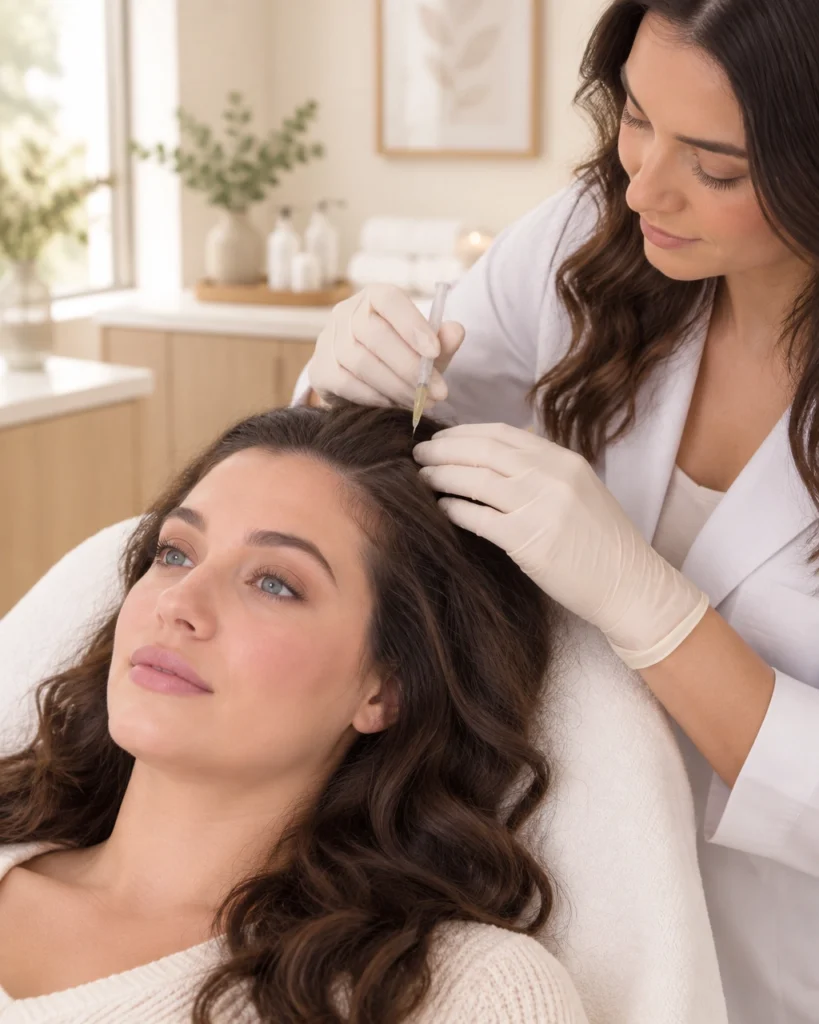
Your provider then places the PRP into areas of scalp thinning using a series of small injections. The goal is to support the health of existing follicles and encourage stronger, fuller-looking growth.
PRP may be a good option for women experiencing early or moderate thinning. It is not a guaranteed cure for hair loss, and it usually cannot restore hair in areas where follicles are no longer active. Your results can also depend on the cause of your hair loss, your overall health, and how consistently you follow your treatment plan.
At Uplift Aesthetics, the ROOTED Hair Restoration Program begins with a comprehensive scalp analysis. Your plan may include PRP, physician-recommended nutraceuticals, targeted serums, and at-home scalp support.
Before Your First Session: The Consultation
Your first visit is about more than simply receiving injections. It gives you and your provider time to understand what may be contributing to your hair thinning.
During your consultation, you can expect to discuss:
- When you first noticed shedding or thinning
- Whether hair loss runs in your family
- Recent stress, illness, hormonal changes, or lifestyle changes
- Your current hair and scalp products
- Any medications or supplements you take
- Your goals for fullness, density, and styling
- Whether PRP is appropriate for your situation
Your provider may examine your scalp and document your starting point with photographs. These baseline images can make subtle changes easier to track later.
At Uplift, the consultation also helps determine whether a comprehensive program is a good fit. The ROOTED Complete program includes scalp analysis, four PRP injection treatments, an at-home care kit, and ongoing support.
Session 1: Establishing Your Baseline
Your first PRP hair restoration appointment usually includes a blood draw, preparation of the PRP, and scalp injections.
Here is what typically happens:
- You eat a meal or snack beforehand and arrive well hydrated.
- Your provider draws a small amount of blood from your arm.
- The sample goes into a centrifuge to separate the platelet-rich plasma.
- Your provider prepares the scalp and injects small amounts of PRP into areas of thinning.
- You receive personalized aftercare instructions before leaving.
Most women describe the process as tolerable. You may feel pressure, brief pinching, or a stinging sensation during the injections. Ice or other comfort measures may be used to help minimize discomfort.
Afterward, your scalp may feel tender or tight. Mild redness, swelling, or bruising can occur. These effects are generally temporary.
First-session aftercare
Uplift Aesthetics recommends that you:
- Avoid wetting your hair for at least four hours
- Avoid heavy exercise, heat, and direct sun for at least two days
- Avoid heat styling and coloring your hair for at least three days
- Follow any medication instructions provided by your clinician
Your scalp may feel slightly sensitive for a short time, but most people can return to regular daily activities.
Session 2: Building on the First Treatment
Many PRP hair restoration plans space sessions approximately four weeks apart. Your second session may feel familiar because the general process is similar: blood draw, centrifuge preparation, and targeted scalp injections.
Your provider may review your scalp and ask about:
- Tenderness or irritation after your first appointment
- Changes in shedding
- How your scalp responded to treatment
- Your at-home hair care routine
- Any concerns about discomfort or aftercare
At this point, you may not see dramatic regrowth yet. That is completely normal. Hair grows slowly, and the follicles need time to respond.
Some women notice less hair in the shower or brush during the first one to two months. Others notice that their hair feels slightly less limp or easier to style. These early changes can be encouraging, but they do not represent the final result.
Session 3: Supporting Early Progress
A third treatment often takes place around eight weeks after your first session. Depending on your plan, this may be the final session in an initial three-treatment series or one of four sessions recommended through a comprehensive program.
Your provider may compare your current scalp photos with your baseline images. You might begin to notice:
- Reduced shedding
- More resilient-feeling hair
- Slightly improved coverage along the part
- Less visible scalp in certain lighting
- Fine new hairs in areas of thinning
Keep in mind that early growth can be subtle. You may see changes before friends or family notice anything. Taking photos in the same lighting and with the same hairstyle can help you track progress more fairly.
Session 4: Completing the Initial Series
At Uplift Aesthetics, the ROOTED Complete and ROOTED Elite programs include four PRP injection treatments. A fourth session may be scheduled around week 12 to 16, depending on your personalized plan.
This session continues the follicle-support process. It does not create overnight volume, but it can help reinforce the progress made during the earlier treatments.
By months three and four, some women begin seeing visible changes. Existing hairs may look thicker, and fine “baby hairs” may become easier to spot. However, the amount of regrowth can vary widely.
Months 4–6: Watching Results Develop
After the initial series, you may have several weeks without injections. This gives your scalp time to respond while the hair growth cycle continues.
Hair does not grow on a fast schedule. For that reason, the months after treatment are often when results become easier to evaluate.
By month six, you may notice:
- A fuller-looking ponytail
- Less visible scalp along your part
- Thicker-feeling strands
- Reduced daily shedding
- Improved styling confidence
- Better coverage in areas that previously looked sparse
Many women begin noticing improvement around three months after treatment, with more meaningful changes around months four through six. Some continue to see gradual improvement for up to 12 months.
Your provider may recommend maintenance treatment based on your response. Common schedules vary. Some people receive a booster around six months, while others follow a different plan based on their hair-loss pattern and goals.
Thickening Versus True Regrowth
One of the most important things to understand about PRP is that “fuller hair” can happen in more than one way.
Thickening
PRP may help existing miniaturized hairs appear stronger or thicker. When the hair shaft becomes more substantial, your overall coverage can look better even if the number of hairs has not dramatically changed.
Regrowth
Some women may also see new fine hairs in areas where follicles are still active. These hairs may gradually become more noticeable as they mature.
The best candidates typically have thinning hair rather than completely bare areas. PRP supports existing follicle activity; it does not recreate follicles that are no longer present.
Is PRP Hair Restoration Safe?
Because PRP comes from your own blood, allergic reactions to the injected material are not expected. The most common effects are temporary tenderness, redness, swelling, or bruising at the injection sites.
Still, PRP is a medical treatment. Your provider should review your health history, medications, scalp condition, and goals before recommending it. Be sure to share any relevant medical information and follow your personalized instructions carefully.
PRP for hair loss is also not a one-size-fits-all treatment. Research has shown potential benefits, but protocols vary and not everyone responds the same way. A thoughtful consultation is an important part of choosing the safest and most effective approach for you.
You can learn more about PRP in Uplift’s PRP treatment guide or review general information from the Cleveland Clinic and the International Society of Hair Restoration Surgery.
Is PRP Right for You?
If you are a woman dealing with gradual thinning, PRP may be worth discussing with a qualified provider. It can be especially helpful when included in a broader plan that addresses scalp health, nutrition, lifestyle factors, and other appropriate hair-restoration options.
If you are looking for the best PRP treatment in MN, start with a consultation rather than a promise. Your provider should explain what PRP can realistically do, how many sessions may be appropriate, and what kind of maintenance you may need.
Uplift Aesthetics serves women throughout Oakdale, Woodbury, Maplewood, and the greater St. Paul area. If you are ready to explore your options, Book Now to schedule a consultation and create a personalized plan for healthier-looking, fuller hair.