
Your calendar is full. Your shoulders are tense. Your workouts may be squeezed between meetings, errands, and everything else on your list.
So, should you spend your recovery time warming up in an infrared sauna or braving a cold plunge? Which one actually helps you feel better? And could using both be the answer if you want less soreness, lower stress, and more energy?
Keep reading and find out more! The best choice depends on your goals, your schedule, and how your body responds.
Infrared Sauna vs. Cold Plunge: What’s the Difference?
Both therapies use temperature to create a response in your body. However, they work in very different ways.
How an infrared sauna works
An infrared sauna uses infrared light to warm your body directly rather than heating the surrounding air to extremely high temperatures. This creates a gentler, more comfortable heat experience for many people.
As your body warms, your blood vessels widen. Your circulation increases, your muscles begin to relax, and you may start to sweat. Many people use infrared sauna sessions to support:
- Muscle relaxation and recovery
- Reduced stiffness after exercise or long workdays
- Circulation
- Stress reduction
- Better sleep and relaxation
- A refreshed, lighter feeling
An infrared sauna is not a replacement for exercise, sleep, hydration, or medical care. Still, it can be a soothing addition to a balanced wellness routine.
How a cold plunge works
A cold plunge uses cold-water immersion to cool the body quickly. The cold causes blood vessels to constrict and temporarily reduces pain signals. After you leave the water, circulation gradually returns as your body warms back up.
People commonly choose cold plunges to support:
- Short-term muscle soreness relief
- Recovery after intense exercise
- Alertness and energy
- A feeling of mental resilience
- Recovery during periods of heavy training
Cold exposure can feel invigorating, but it also creates a strong stress response. That is why shorter, controlled sessions are usually a better starting point than trying to endure the cold for as long as possible.
Which Is Better for Recovery?
The honest answer? It depends on what you mean by “recovery.”
If your goal is immediate soreness relief after a demanding workout, a cold plunge may have an advantage. Research suggests cold-water immersion can reduce delayed-onset muscle soreness over the next 24 to 72 hours. This can be useful when you have back-to-back workouts, competitions, or a particularly intense training week.
However, cold plunging immediately after every strength-training session may not be ideal if your main goal is building muscle. Some research suggests that frequent, immediate cold exposure may reduce some of the inflammation and muscle-building signals your body needs after resistance training.
Infrared sauna sessions take a different approach. Heat may help you feel less stiff and more relaxed by promoting circulation and easing muscle tension. The strongest evidence for sauna use overall relates to cardiovascular health, relaxation, and consistent long-term wellness rather than dramatic, immediate performance gains.
For many busy professionals, that relaxing effect is exactly the point. A 20- or 30-minute infrared sauna session can help you transition out of work mode and into a calmer evening.
Infrared Sauna Protocols to Try
If you are new to infrared sauna sessions, start conservatively. You do not need to stay in as long as possible to receive benefits.
A typical starting protocol may look like this:
- Temperature: Approximately 120–150°F, depending on the equipment and your comfort
- Duration: 10–20 minutes for your first few sessions
- Progression: Build toward 20–30 minutes as tolerated
- Frequency: Two to four sessions per week for a consistent routine
- Hydration: Drink water before and after your session
Many people enjoy infrared sauna sessions after work or in the evening. If relaxation and sleep are your priorities, try scheduling your session about 60–120 minutes before bedtime. As your body cools down afterward, you may find it easier to settle into sleep.
If muscle growth is your top priority, consider separating heat sessions from intense strength training by several hours or using the sauna on a rest day. This keeps your routine simple while allowing you to focus on the goals that matter most.
Cold Plunge Protocols to Try
Cold plunges require a little more caution because the temperature change is sudden. The goal is not to prove how tough you are. The goal is to use the therapy safely and intentionally.
A common introductory approach includes:
- Temperature: About 50–59°F
- Duration: Start with 1–3 minutes
- Progression: Increase gradually only if you tolerate it well
- Frequency: One to three sessions per week may be enough for many people
- Breathing: Enter slowly and focus on steady, controlled breathing
Avoid jumping in quickly or holding your breath. Cold shock can cause rapid changes in breathing, heart rate, and blood pressure. If you feel confused, unusually weak, dizzy, numb, or unable to control your breathing, get out immediately and warm up safely.
Cold plunges can also feel stimulating. For that reason, many people prefer using them in the morning or earlier in the day rather than close to bedtime.
Should You Combine Infrared Sauna and Cold Plunge?
Contrast therapy means alternating heat and cold. Some athletes use this approach to feel refreshed after demanding physical activity. A simple contrast routine might include:
- Spend 10–15 minutes in a sauna.
- Rest and hydrate briefly.
- Use a cold plunge for 1–3 minutes.
- Rest until your breathing and body temperature feel comfortable.
- Repeat one or two times if you tolerate it well.
You do not need to alternate several times to create a meaningful experience. One round may be plenty, especially when you are new to temperature therapy.
Keep your goals in mind. If you want to feel calm and prepare for sleep, ending with heat may feel better. If you want an alert, energized feeling, ending with cold may be more appealing.
And if you have recently had a medical aesthetics treatment, ask your provider about timing. Some aesthetic treatments have specific aftercare instructions, and heat exposure may not be appropriate immediately after every service.
Which Recovery Trend Fits Your Lifestyle?
Here is a simple way to decide:
Choose infrared sauna if you want to:
- Relax after a stressful workday
- Ease general muscle tension and stiffness
- Support a regular wellness routine
- Encourage better sleep
- Enjoy a more gradual, comfortable temperature experience
- Add intentional self-care to a busy schedule
Consider cold plunge if you want to:
- Manage soreness after high-volume exercise
- Feel more alert and energized
- Support recovery during intense training periods
- Experiment with a brief, invigorating challenge
- Use a tool that may help you feel less sore over the next day or two
Consider both if you want to:
- Build a broader recovery routine
- Use heat for relaxation and cold for occasional soreness
- Create a structured reset after a demanding week
- Adjust your routine based on your training and energy levels
Just about anybody can benefit from making recovery more intentional. You do not have to train like an athlete or spend hours at a wellness facility. A short, consistent session may fit your life better than an ambitious routine you cannot maintain.
Safety Considerations You Should Know
Infrared sauna and cold plunge sessions are not appropriate for everyone. Talk with your healthcare provider before using either therapy if you are pregnant or have cardiovascular disease, uncontrolled high blood pressure, arrhythmias, circulation problems, fainting concerns, or another condition affected by heat or cold.
For safer sessions:
- Avoid alcohol before heat or cold exposure.
- Hydrate before and after an infrared sauna.
- Never use a cold plunge alone.
- Enter and exit slowly.
- Stop if you feel dizzy, nauseated, confused, or unwell.
- Do not treat sweating as proof of “detoxification” or weight loss.
- Follow the instructions provided by the facility and equipment manufacturer.
These therapies should support your wellness: not leave you depleted. Sleep, nutrition, movement, and appropriate medical care remain the foundation of recovery.
Try an Infrared Sauna in Oakdale
If you are looking for an infrared sauna in Oakdale, Uplift Aesthetics offers a private Wellness Room in Oakdale designed to help you pause, recharge, and reconnect with yourself.
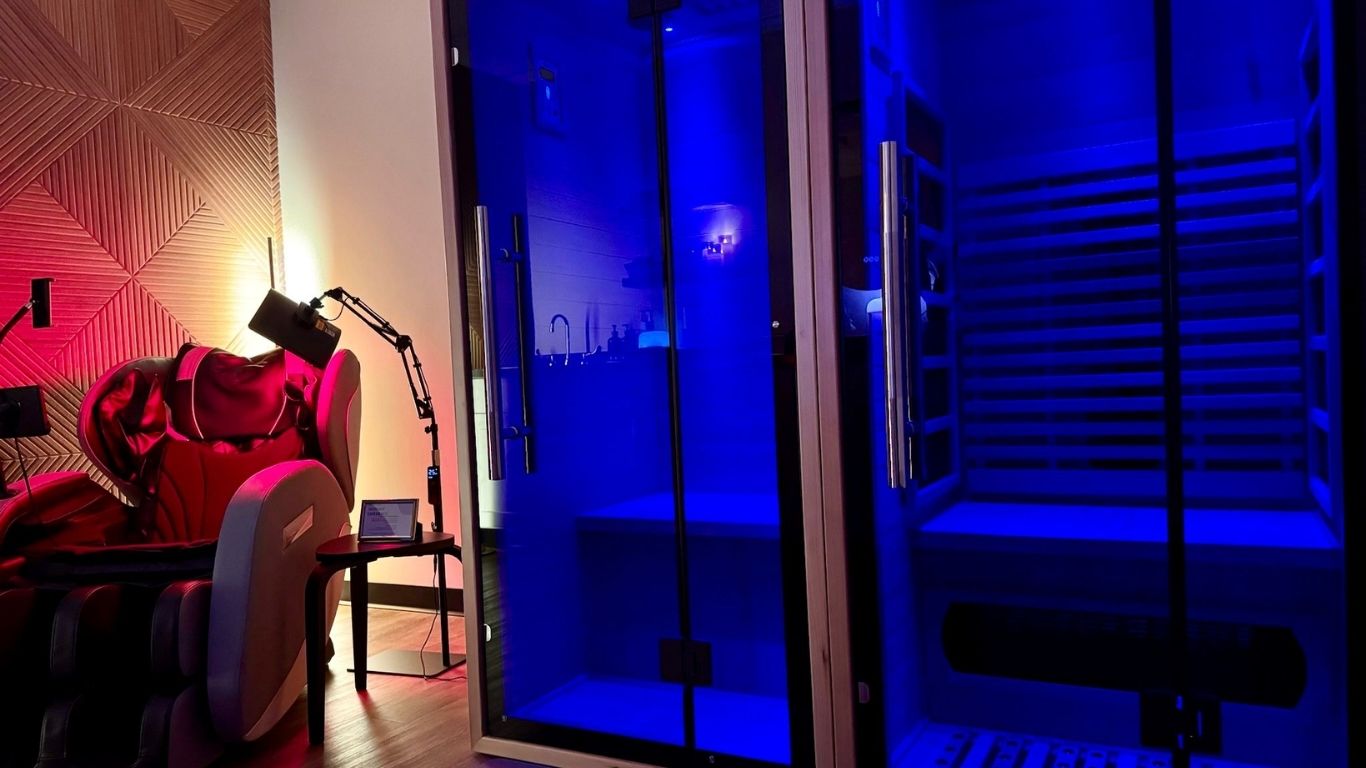
The Wellness Room includes infrared sauna access along with calming amenities such as a massage chair, aromatherapy, and refreshing hydration options. You can customize your time based on your needs, whether you want a quick reset or a longer wellness escape.
The Uplift Wellness Suite brings together infrared sauna, salt therapy, red light therapy, and relaxation features in one private experience. It can be a natural complement to your broader self-care routine and your goals in medical aesthetics.
Not sure where to begin? You can explore Uplift’s medical aesthetics and wellness services or Book Now to create time for your next reset.
The Bottom Line
Cold plunges may be the better choice for short-term soreness relief and an energizing challenge. Infrared sauna may be a better fit for relaxation, stress support, circulation, sleep, and a sustainable recovery habit.
There is no single “best” recovery trend for everyone. The right choice is the one that matches your goals, feels safe for your body, and fits realistically into your life.
Start slowly. Stay consistent. And give yourself permission to make recovery part of your routine( not something you earn only after you are exhausted.)