Do you have trouble turning off your thoughts at night? Maybe your body feels tired, but your mind is still working through tomorrow’s schedule, unfinished tasks, and everything in between.
So, could an evening infrared sauna session help you relax and sleep more comfortably? It may! The key is not simply using heat. Timing, temperature, session length, and your wind-down routine all matter.
If you’re searching for an infrared sauna in Oakdale, keep reading and find out how to make your session more sleep-friendly.
Why Passive Body Heating May Support Sleep
Your body naturally cools down as you prepare for sleep. That drop in body temperature is part of the normal sleep process.
An infrared sauna temporarily warms your body. After you leave, your body gradually cools. This warming-and-cooling pattern may support relaxation and help signal that it is time to slow down.
This is known as passive body heating. Unlike exercise, you are not actively working your muscles. You are simply allowing gentle heat to warm your body while you rest.
Research on passive heating, including warm baths and sauna-style heat, suggests that warming your body before bed may support:
- Easier relaxation
- A smoother transition from work to rest
- Faster sleep onset for some people
- A more comfortable wind-down routine
- Relief from everyday muscle tension
However, more heat is not automatically better. A long, intense session too close to bedtime may leave you feeling overheated, thirsty, or energized instead of sleepy. That is why your timing makes such a difference.
The Best Time to Use an Infrared Sauna for Sleep
For most people, a good starting point is to finish your infrared sauna session about one to two hours before bed.
This gives your body time to cool gradually. It also leaves room for a calm, low-stimulation routine afterward.
For example, if your bedtime is 10:30 p.m.:
- Start your sauna session around 8:45 or 9:00 p.m.
- Stay in for approximately 10 to 20 minutes
- Finish by 9:15 p.m. at the latest
- Spend the next hour in a quiet wind-down routine
- Get into bed around 10:15 to 10:30 p.m.
A review of passive body heating and sleep suggests that the cooling period after heat exposure may be especially helpful when it overlaps with your normal pre-bed routine. You can read more about the relationship between sauna use and sleep in this research summary on sauna and sleep.
Why you should avoid using it right before bed
A session immediately before bedtime may not work well for everyone. You may still feel warm when you get into bed, and that can make it harder to become comfortable.
Try to avoid stepping out of the sauna and going straight under the covers. Instead, allow time to:
- Cool down naturally
- Sip water
- Take a comfortable shower if desired
- Put on loose, breathable clothing
- Dim the lights
- Stay away from stressful work or stimulating screens
Your goal is to feel relaxed and comfortably warm, not hot, flushed, or restless.
What Temperature Is Best for Sleep?
Infrared saunas generally operate at lower temperatures than traditional saunas. For a sleep-focused session, start gently.
A practical starting range for many healthy adults is:
- 120°F to 130°F
- Approximately 49°C to 54°C
- Increase gradually toward 130°F to 140°F only if you tolerate the heat comfortably
You do not need the highest setting to benefit from a relaxing session. In fact, a moderate temperature may be more appropriate in the evening because it can help you unwind without making you feel overstimulated.
If you are new to infrared sauna use, begin at the lower end of the range. Notice how your body responds during the session and later that night.
You should not feel like you have to push through:
- Dizziness
- Nausea
- Headache
- Racing heartbeat
- Shortness of breath
- Unusual weakness
- Feeling faint or confused
If any of these symptoms occur, leave the sauna and cool down. Your comfort and safety come first!
How Long Should You Stay in the Sauna?
For sleep support, keep your first sessions short and moderate.
A simple progression might look like this:
- First session: 10 minutes at approximately 120°F
- Next few sessions: 10 to 15 minutes if you feel comfortable
- Regular evening session: 15 to 20 minutes as tolerated
There is no need to stay in for 30, 45, or 60 minutes just because you have the option. Longer sessions may increase sweating and fluid loss, which can work against restful sleep.
A shorter session may be especially helpful if you:
- Are sensitive to heat
- Often wake up thirsty
- Experience night sweats
- Have never used an infrared sauna
- Tend to feel energized after heat exposure
- Have a late bedtime
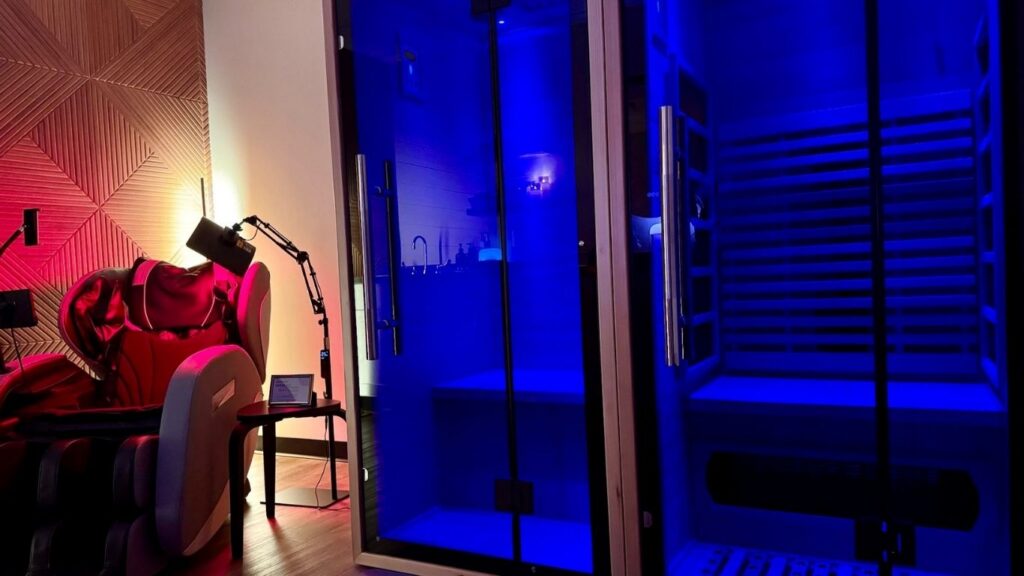
At Uplift Aesthetics, the Wellness Room in Oakdale offers a private setting where you can pause, relax, and customize your wellness experience. The space also includes calming amenities such as a massage chair, aromatherapy, cooling towels, and infused water.
Hydration: Enough, But Not Too Much
Hydration is an important part of any sauna session. Even a short infrared sauna visit can make you sweat.
The goal is to avoid both dehydration and drinking so much water right before bed that you wake up repeatedly during the night.
Try this approach:
- Drink water normally throughout the day.
- Have some water before your session if you are thirsty.
- Sip water during or after the session.
- Replace fluids gradually rather than drinking a large amount all at once.
- If you sweat heavily, consider an electrolyte-containing drink earlier in the evening.
- Avoid large amounts of fluid immediately before getting into bed.
For many adults, approximately 8 to 16 ounces of water after a short session may be a reasonable starting point. Your needs can vary based on your body size, activity level, the temperature, and how much you sweat.
If you have a medical condition that affects hydration, blood pressure, kidney function, or fluid balance, ask your healthcare provider for personalized guidance.
Build a Simple Wind-Down Routine
The sauna works best as one part of your evening routine, not as the entire routine.
After your session, use the next hour to help your nervous system shift into rest mode. You might:
- Take a comfortably cool shower
- Change into soft, breathable pajamas
- Lower the lights
- Read a few pages of a book
- Try gentle stretching
- Practice slow breathing
- Listen to calming music
- Keep your phone out of reach
- Prepare your bedroom so it feels cool and comfortable
Try to avoid jumping directly from the sauna into emails, stressful conversations, intense exercise, or work planning. Your body may be ready to relax, but your mind can quickly become alert again.
Think of the post-sauna period as a bridge between your busy day and bedtime.
Track Your Response With a Sleep Log
Everyone responds to heat differently. A simple sleep log can help you figure out what works best for your body.
You do not need a complicated app or wearable device. Use a notebook or phone note for two weeks and record:
| What to track | Example |
|---|---|
| Sauna start time | 8:45 p.m. |
| Session length | 15 minutes |
| Temperature | 125°F |
| Water intake | 12 ounces after |
| Lights-out time | 10:30 p.m. |
| Time to fall asleep | About 20 minutes |
| Nighttime awakenings | One |
| Morning feeling | Rested, neutral, or tired |
After several sessions, look for patterns.
Do you fall asleep more easily when you finish two hours before bed? Do you sleep better after 10 minutes instead of 20? Do you feel too warm when you use a higher temperature?
Use those answers to personalize your routine. If you consistently feel restless, overheated, or unusually alert after evening sauna use, move your session earlier in the day or reduce the temperature and duration.
When to Check With Your Healthcare Provider
Infrared sauna may be comfortable and relaxing for many healthy adults, but it is not right for everyone.
Talk with your healthcare provider before using sauna if you have:
- Heart disease or a history of irregular heartbeat
- Uncontrolled high blood pressure
- Frequent fainting or very low blood pressure
- A condition that affects sweating or temperature regulation
- A recent illness or surgery
- Medications that affect blood pressure, hydration, or heat tolerance
- A pregnancy or other health concern requiring special precautions
Avoid sauna use after drinking alcohol. Alcohol can increase dehydration and make it harder to notice how heat is affecting you.
Also, if you recently had an aesthetic treatment, ask your provider when it is appropriate to resume heat exposure. Depending on your service, you may need to avoid saunas, hot tubs, or heavy sweating for a period of time.
A Simple Infrared Sauna Sleep Plan
Ready to try a gentle evening routine? Start here:
- Timing: Finish one to two hours before bed
- Temperature: Begin around 120°F to 130°F
- Duration: Start with 10 to 15 minutes
- Hydration: Sip water before and after
- Wind-down: Keep the next hour quiet and low-key
- Tracking: Use a simple sleep log for two weeks
- Adjustment: Move earlier or shorten the session if you feel overheated or restless
An infrared sauna should feel like a supportive wellness habit, not a challenge to endure.
If you’re looking for an infrared sauna in Oakdale, the Uplift Wellness Suite provides a private space to relax, recharge, and create intentional time for yourself. You can book your wellness session online and begin building a routine that helps you feel calmer and more restored.
A few quiet minutes today may help you look forward to a better night ahead!