Noticing more scalp through your part or finding extra hair in your brush can feel unsettling, especially when you’re already managing the demands of work, family, and everything else. If you have polycystic ovary syndrome (PCOS), could hormonal changes be part of the picture? And might platelet-rich plasma (PRP) help?
The short answer: PCOS can contribute to hair thinning, and PRP may be an option for some people. But the right first step is understanding why your hair is changing. PRP may support existing follicles; it does not correct an underlying hormonal imbalance or replace medical care. Keep reading to learn what to ask, what PRP can, and cannot, do, and how to set realistic expectations.
A note about your health: This article is for general information, not a diagnosis or a treatment plan. A clinician who can review your history and examine your scalp is best placed to guide you.
How PCOS may be connected to hair thinning
PCOS can involve changes in androgen hormones. In some people, androgen sensitivity may contribute to gradual thinning on the scalp, often around the central part or crown. But hair loss has several possible causes, and thinning by itself does not confirm PCOS or prove that hormones are the cause.
A clinician may consider other explanations, too. Diffuse shedding, for example, can sometimes follow an illness, major stress, a medication change, or a nutritional issue. Thyroid conditions and iron deficiency are among the other possibilities a provider may assess when appropriate.
That’s why a good starting point is a medical evaluation, not assuming every change in your hair is “just PCOS.”

Start with a diagnosis, not a treatment
If your thinning is new or becoming more noticeable, consider booking with your primary care provider, gynecologist, or a dermatologist who evaluates hair and scalp conditions. They can review how quickly the change started, your health history, medications, menstrual patterns, and any other symptoms, then examine your scalp.
Depending on what they find, they may discuss testing. There isn’t one standard lab panel that fits everyone, but a provider might consider hormone testing or check for other possible contributors, such as thyroid or iron issues. If PCOS has not been diagnosed, your clinician can also explain what evaluation is appropriate. Hair thinning alone isn’t enough to establish that diagnosis.
Seek medical evaluation promptly if hair loss is sudden, patchy, accompanied by scalp pain, redness or scaling, or seems to be leaving smooth or scarred areas. Rapid changes along with signs such as a newly deepened voice also deserve timely medical attention. These patterns may need a different evaluation than gradual thinning.
What PRP hair restoration does
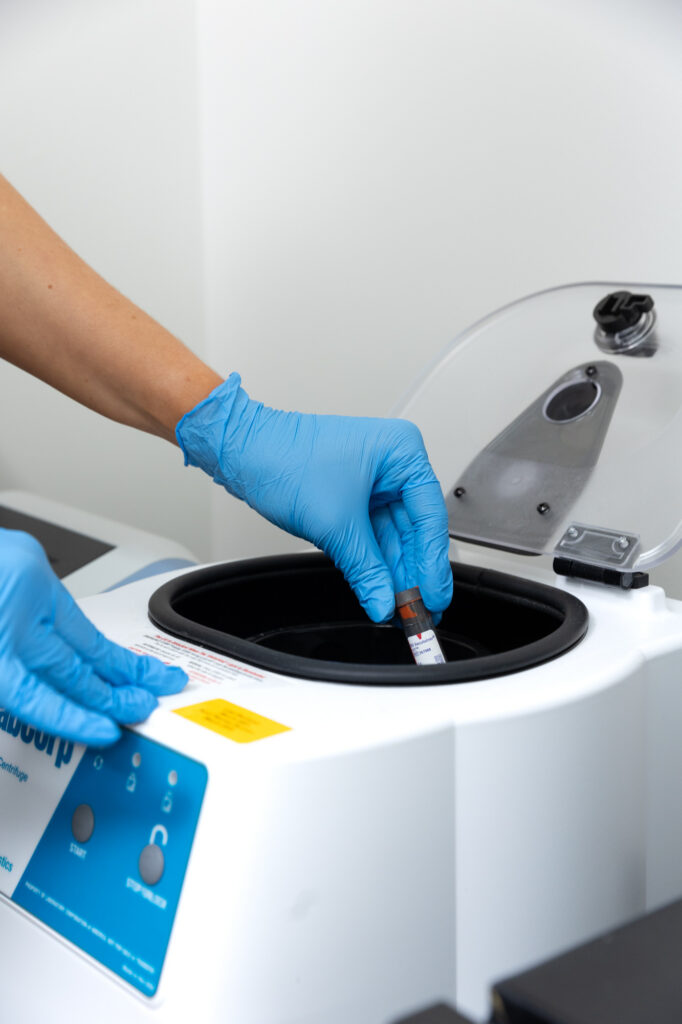
PRP stands for platelet-rich plasma. A provider draws a small blood sample, processes it to concentrate platelets in the plasma, and injects the preparation into selected areas of the scalp. Platelets contain growth factors involved in the body’s repair processes. Researchers are studying whether PRP may help support hair density in some types of hair loss.
The evidence is encouraging, but it isn’t a promise. A 2024 systematic review of randomized trials in women reported improvements in measures such as hair density and thickness. However, the studies included different types of hair loss and used varied treatment protocols. The authors noted that results can vary, and the evidence does not tell us exactly how a specific person with PCOS will respond. You can read the published review for more detail.
Most importantly, PRP is not a treatment for PCOS itself. It does not balance hormones, and it should not take the place of medical management. If a clinician identifies an underlying hormonal or other health issue, addressing that issue remains important. PRP may be discussed as an add-on when it makes sense for your diagnosis and goals.

When might it make sense to ask about PRP?
PRP may be worth discussing after a clinician has evaluated the cause of your thinning and you understand the available options. In general, it is more reasonable to explore when a qualified provider believes you have a type of nonscarring hair loss and there are still active follicles in the area.
That distinction matters. PRP may support follicles that are still present and functioning, but it cannot revive follicles that are no longer active. It also cannot guarantee that hair will return to its previous density. A qualified provider should explain whether your scalp and pattern of hair loss are appropriate for consideration, or whether you should first seek further medical evaluation.
Questions you can take to a consultation include:
- What do you think is causing my hair loss, and what findings support that?
- Should I see a dermatologist or another medical provider before considering PRP?
- Are any lab tests or other evaluations appropriate for me?
- What might PRP realistically improve in my situation?
- How will we track progress, and when will we reassess?
- What are the possible side effects, costs, number of sessions, and maintenance needs?
Timelines, sessions, and realistic expectations
Hair changes slowly, so PRP is not an overnight fix. At Uplift Aesthetics, the hair restoration with PRP service describes an initial series of three sessions, with maintenance potentially needed. The service page also notes that changes may take time to notice. These are general service details, not a guarantee or a schedule that suits everyone.
Before treatment, ask how the provider will document your starting point, such as consistent photographs, and when you should expect a follow-up. Agreeing on a review point helps you evaluate changes more clearly than relying on day-to-day impressions. Your provider should also talk with you about discomfort, temporary tenderness, redness, or bruising, and give you instructions for aftercare.
If you’re searching for PRP Woodbury MN or hair restoration Woodbury, Uplift Aesthetics is based in Oakdale and serves clients from Woodbury and nearby communities. A consultation is a chance to discuss the service and understand whether it may fit your situation. It is not a substitute for a diagnostic evaluation when the cause of hair loss is uncertain.

A thoughtful next step
Hair thinning can affect just about anybody, and it can feel especially personal when you’re already navigating hormonal changes or a new chapter in life. You deserve answers without pressure to choose a treatment before you understand what is happening.
Start with a proper evaluation. If PCOS or another condition is involved, work with your medical provider on the underlying health picture. Then, if PRP is appropriate, consider it as one possible part of a broader plan, not a cure for hormonal imbalance. With a clear diagnosis, realistic expectations, and experienced care, you can make a more confident decision about what comes next.