
You finished your strength workout. You lifted heavy, challenged your muscles, and checked one more thing off your busy schedule. Now what?
Could a sauna help you feel less sore tomorrow? Is it better to use heat immediately after lifting, or should you wait a few hours? And could combining sauna time with a salt booth and massage chair create a more relaxing recovery ritual?
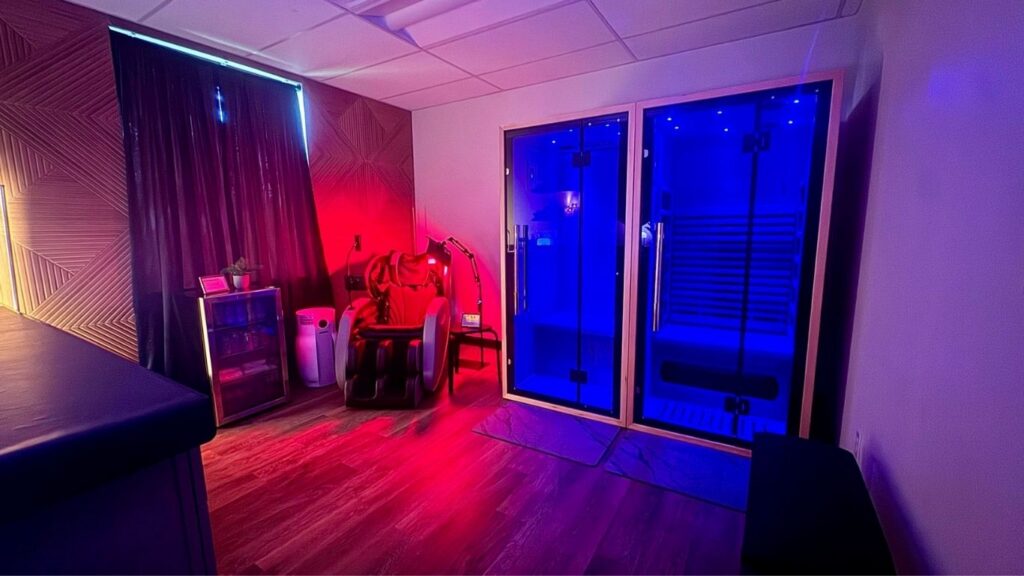
That combination is often called recovery stacking. At Uplift Aesthetics, recovery stacking means combining wellness experiences in one visit: infrared sauna, salt booth therapy, and full-body massage chair relaxation.
It can be a wonderful way to pause and reset. However, it helps to understand what sauna recovery can, and cannot, do for your body. Keep reading and find out how to approach sauna after resistance training safely and thoughtfully.
What Does Sauna After a Workout Actually Do?
An infrared sauna raises your body temperature through infrared heat rather than heating only the air around you. As your temperature rises, your heart rate and circulation may increase. Your muscles may also begin to relax.
After a workout, this can feel especially soothing if you have tight shoulders, stiff hips, or tired legs. You may leave feeling calmer and less tense.
The research is encouraging in some ways, but it is not definitive. Some studies suggest that sauna after exercise may:
- Reduce how sore you feel the next day
- Support a greater sense of relaxation
- Improve perceived recovery
- Help you feel less stiff
- Support a calming transition from workout mode to evening mode
However, evidence is still limited and mixed when it comes to objective muscle recovery. Sauna has not been proven to dramatically speed muscle repair, increase strength overnight, or replace sleep and nutrition.
In other words, sauna may help you feel better. That matters! But it should support, not replace, the basics of recovery:
- Adequate protein and calories
- Hydration
- Consistent sleep
- Rest days
- A well-planned resistance training program
- Medical care when needed
You can read more about the current evidence in this review of post-exercise heat exposure and recovery and NASM’s discussion of what recovery science does and does not show.
When Should You Use a Sauna After Lifting?
There is no single perfect time for every woman. Your workout intensity, hydration, fitness level, and next training session all matter.
Option 1: Immediately after a moderate workout
If your workout was challenging but not exhausting, you may tolerate a short sauna session after cooling down and drinking fluids.
A conservative approach is:
- Finish your workout.
- Walk slowly or stretch lightly for several minutes.
- Drink water or an electrolyte beverage.
- Wait until your breathing and heart rate feel closer to normal.
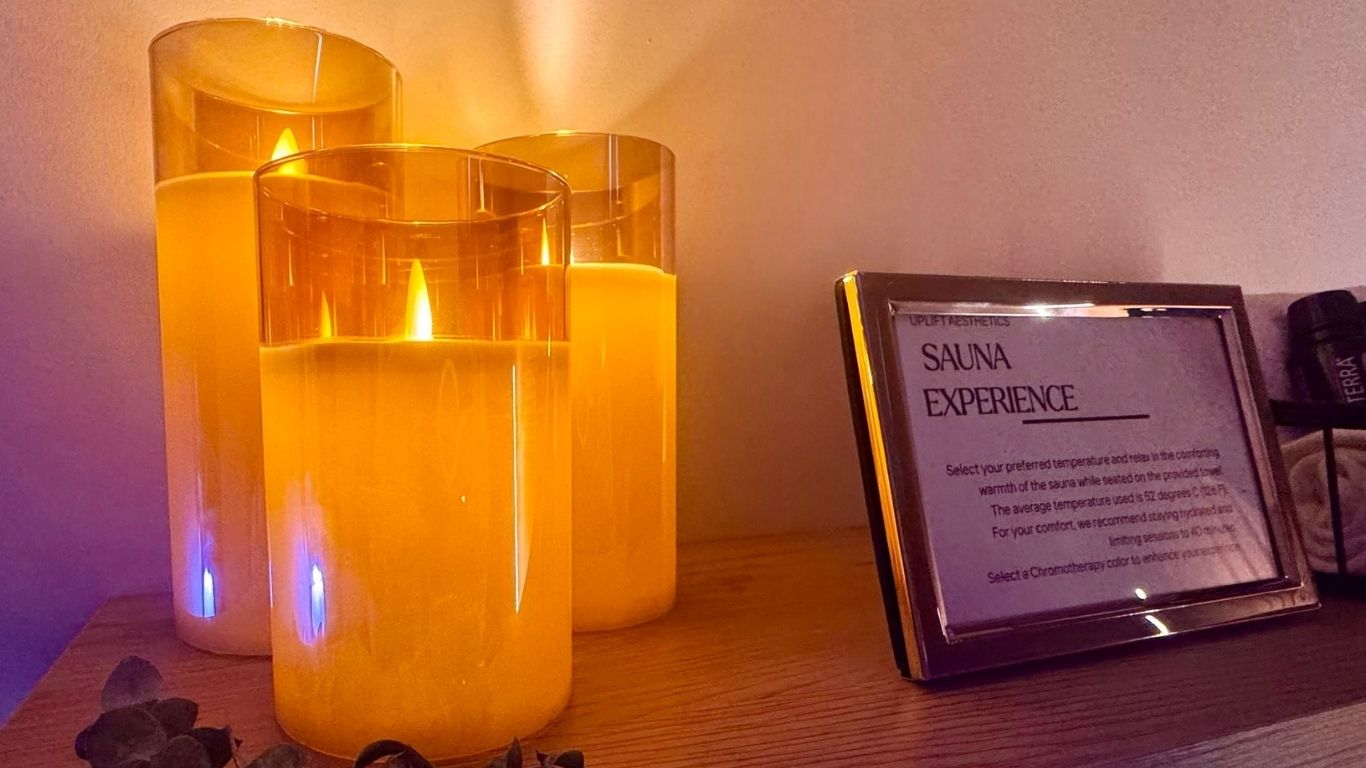
- Start with 5 to 10 minutes in the sauna.
If you feel comfortable, you may gradually work toward 10 to 20 minutes. You do not need to stay longer to make the session more valuable.
Option 2: Four to six hours later
If you completed a very demanding leg day, trained close to failure, or plan to work out again within 24 hours, consider separating sauna time from lifting by approximately 4 to 6 hours.
This gives your body more time to rehydrate and settle after the workout. It also prevents the sauna from becoming another major stressor when your body is already depleted.
Option 3: On a rest day
A rest day may be the best time for a longer relaxation-focused wellness session. You can enjoy the heat, salt booth, and massage chair without trying to fit another stressor immediately after intense training.
The goal is not to “earn” recovery. The goal is to give your body space to recover well.
Hydration Comes Before Heat
Resistance training and sauna both increase fluid demands. If you enter the sauna already dehydrated, you may be more likely to experience headache, dizziness, nausea, or fatigue.
Before entering the sauna after lifting, consider drinking approximately 12 to 16 ounces of water or an electrolyte beverage, depending on how much you sweated and your individual needs.
Then:
- Sip fluids during your visit if permitted.
- Continue drinking water for the next 1 to 2 hours.
- Consider electrolytes after a long, sweaty workout or sauna session.
- Avoid alcohol before or after sauna use.
- Do not force excessive amounts of water if you are not thirsty.
Your urine color, thirst, workout intensity, and sweat rate can all provide useful clues. If you feel lightheaded, unusually weak, nauseated, or confused, leave the sauna immediately and cool down.
Hydration helps your recovery plan. It does not need to become another item on your never-ending to-do list!
What Is Recovery Stacking?
Recovery stacking means combining several relaxing wellness tools in one visit instead of treating each experience as a separate appointment.
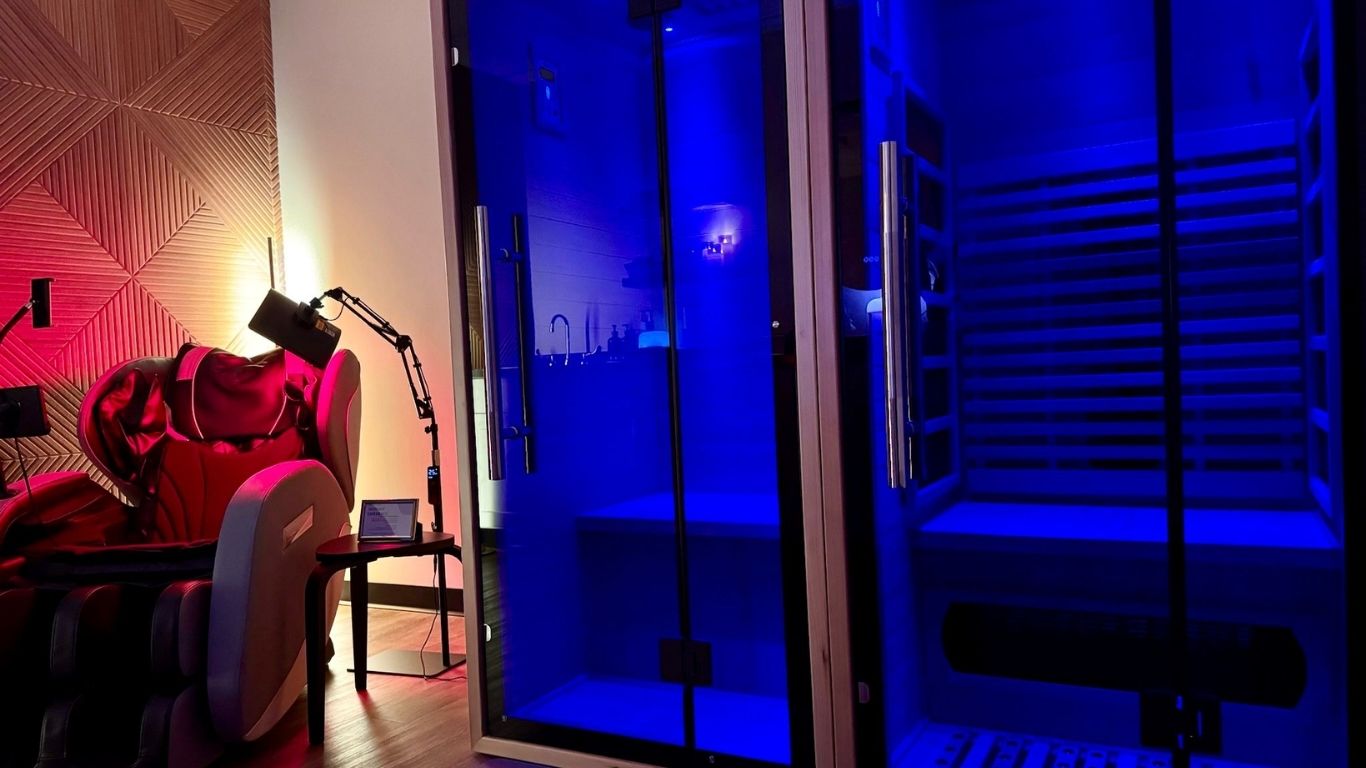
At Uplift Aesthetics’ Wellness Suite, a recovery-focused visit may include:
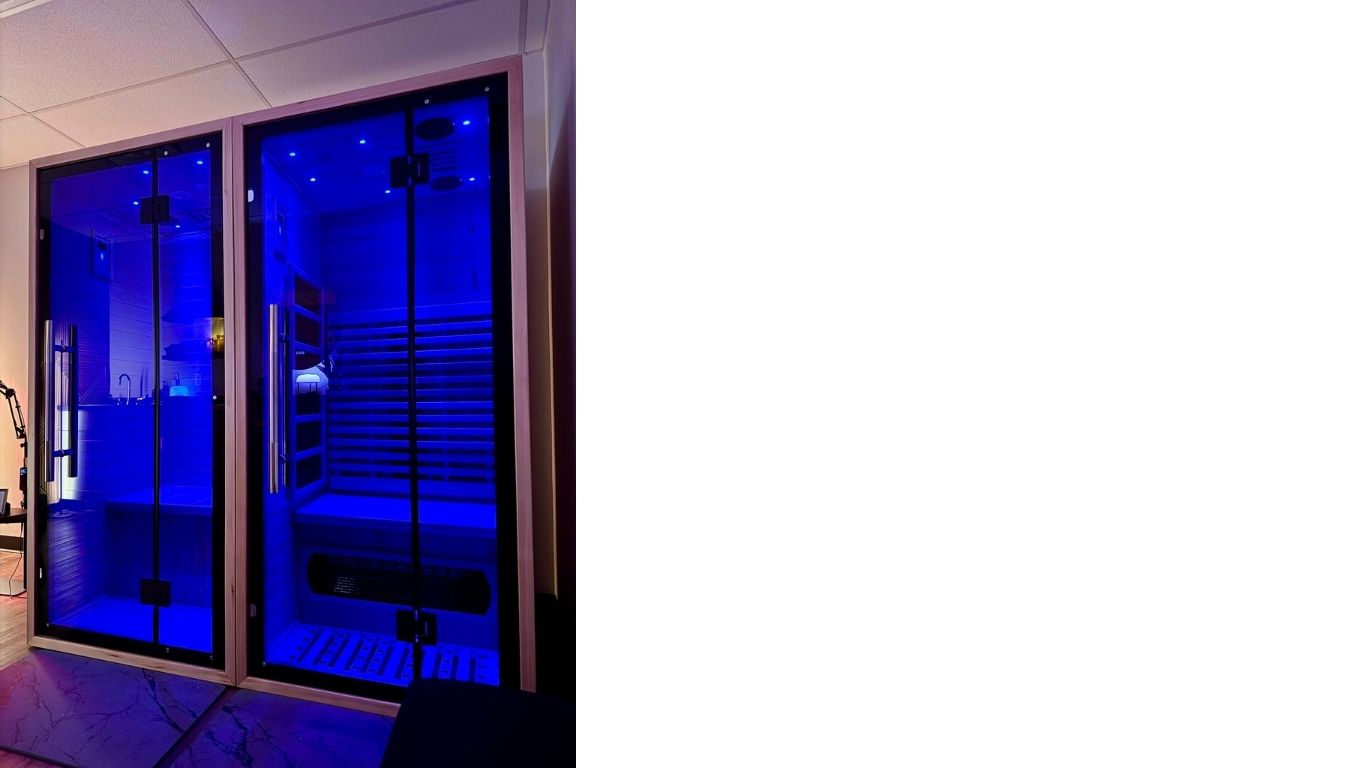
- Infrared sauna: Heat that encourages relaxation and may help ease the sensation of muscle tension.
- Salt booth therapy: A quiet, salt-infused environment designed around respiratory wellness and relaxation.
- Full-body massage chair: Mechanical massage across the back, shoulders, hips, legs, and other areas that commonly hold tension.
A simple stack for a healthy adult might look like this:
- Cool down and hydrate after your workout.
- Spend 5 to 15 minutes in the infrared sauna.
- Take a short cooling and hydration break.
- Spend 10 to 20 minutes in the salt booth.
- Finish with 10 to 15 minutes in the massage chair.
You can also reverse the order based on your comfort. If you feel warm or tired after the sauna, save the massage chair for the end and keep the rest of the visit quiet.
What about the salt booth?
Salt booth therapy may feel calming and refreshing, especially if you enjoy a quiet breathing environment. However, it is important to keep expectations realistic.
Salt therapy is not a proven treatment for muscle repair, strength gains, or workout-related soreness. Research on halotherapy remains limited. Think of it as a relaxation and respiratory wellness experience, not a replacement for medical treatment or a guaranteed recovery shortcut.
The Uplift Wellness Room gives you the flexibility to combine these experiences in a private setting near Woodbury in Oakdale.
Can Sauna Reduce Muscle Soreness?
It may help reduce your perception of soreness. Heat and relaxation can make muscles feel less guarded or tense. Increased circulation and a calmer nervous system may also help you feel more comfortable.
But soreness is not the only measure of recovery. You may still have muscle fatigue or tissue stress even if you feel relaxed after sauna time.
For that reason, do not use a sauna session as proof that your body is ready for another intense workout. Pay attention to:
- Your strength during warm-up
- Your coordination and balance
- Your resting energy
- Any sharp or unusual pain
- Your sleep quality
- Whether your muscles feel recovered or simply less uncomfortable
Feeling better is a positive result. It is just not the same as being fully recovered.
Who Should Check With a Doctor First?
Sauna is not appropriate for everyone, especially after strenuous exercise. Talk with your doctor before adding post-workout sauna if you have:
- Heart disease or a history of heart attack
- An irregular heartbeat or significant arrhythmia
- Uncontrolled high blood pressure
- Very low blood pressure or a history of fainting
- Kidney disease
- A condition that affects fluid balance
- Heat intolerance or a history of heat illness
- Pregnancy or a complex medical condition
- A medication plan that affects blood pressure, sweating, or hydration
You should also postpone sauna if you are sick, feverish, dehydrated, or feeling unusually fatigued.
During your session, exit right away if you experience dizziness, nausea, chest discomfort, trouble breathing, faintness, confusion, or a racing heartbeat that feels abnormal. When in doubt, choose the safer option and speak with a medical professional.
A Practical Sauna Recovery Plan for Women Who Lift
If you are generally healthy and have no medical restrictions, try this simple plan:
Before your visit
- Eat a balanced meal or snack after your workout.
- Drink water before entering the sauna.
- Bring comfortable clothing and a clean towel.
- Avoid alcohol and arrive feeling hydrated.
During your visit
- Start with 5 to 10 minutes of sauna time.
- Take a cooling break before adding another wellness service.
- Keep the salt booth portion calm and easy.
- Use the massage chair at a comfortable intensity.
- Do not push through dizziness or nausea.
After your visit
- Continue hydrating.
- Eat a protein-rich meal if you have not already.
- Avoid scheduling another intense workout if you feel drained.
- Prioritize a full night of sleep.
- Notice how your body feels over the next 24 hours.
Over time, you will learn whether sauna helps you feel more relaxed, less stiff, or better prepared for your next workout.
The Bottom Line
Sauna after resistance training may support relaxation and reduce how sore you feel. The evidence does not yet show that it dramatically accelerates muscle repair or improves every measure of athletic recovery.
That is why the best approach is balanced. Hydrate first. Keep your session conservative. Use sauna later in the day or on rest days after especially hard workouts. Let sleep, nutrition, and smart training remain the foundation.
Recovery stacking can be a practical way for busy professional women to combine sauna, salt booth therapy, and massage chair relaxation in one private visit. If you are in Woodbury or the east metro, Uplift Aesthetics’ Wellness Suite in Oakdale offers a convenient place to slow down, recharge, and take care of yourself.
You do not have to wait until you are completely exhausted to recover. A thoughtful reset today can help you feel more like yourself tomorrow.
Book online with Uplift Aesthetics to learn more about creating a wellness routine that fits your schedule and goals.